
How To
How to Become a Microbiologist after 12th in India: A Complete Guide

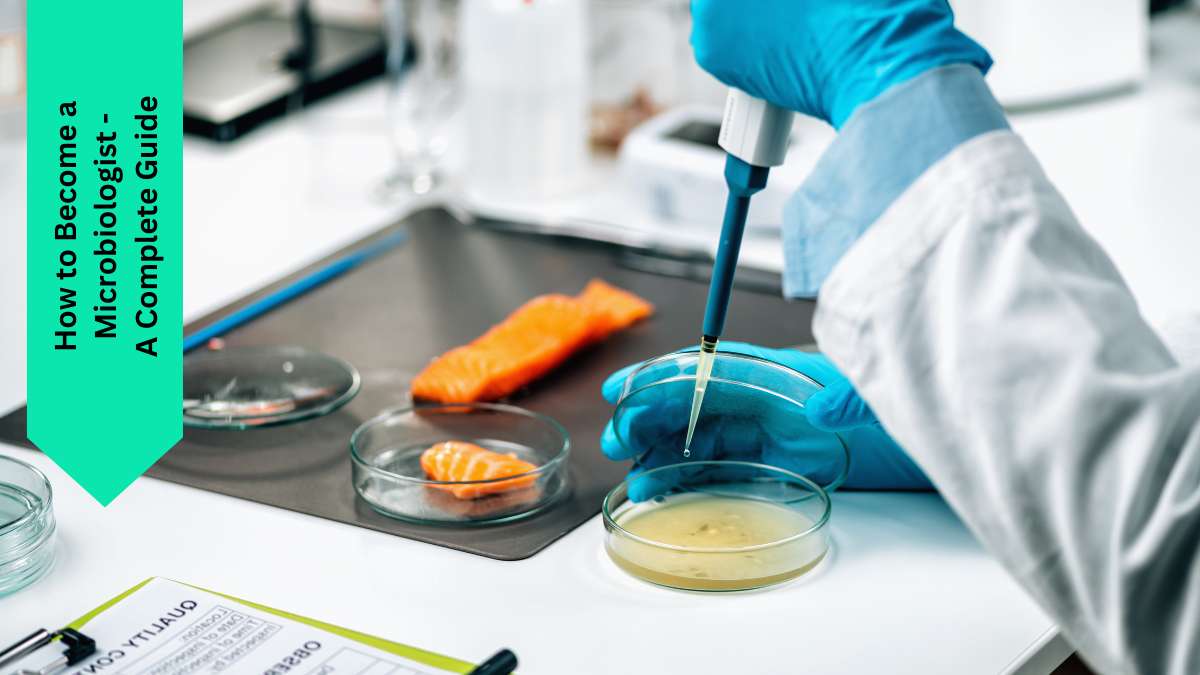
Have you ever looked at a drop of pond water under a microscope? If yes, you probably saw tiny things moving around. Those are microorganisms – the smallest living things on Earth. Now, imagine making a full career out of studying them. That is exactly what a microbiologist does. And honestly, it is one of the most exciting science careers today. Check how to become a Microbiologist after 12th in India.
You see, after the COVID-19 pandemic, the whole world realised how important this field really is. Suddenly, we needed more lab experts, more vaccine makers, and more virus researchers than ever before. And that need has not gone away.
If you are in Class 11 or 12 with Science (PCB), and if tiny creatures, lab work, and discoveries excite you, then microbiology might just be your thing.
Here is a fun fact to start with: India’s biotechnology and life sciences sector is expected to reach $150 billion by 2025. That is a lot of growth. And it means a lot of jobs for trained microbiologists like you.
So, grab a cup of chai, sit comfortably, and let us explore this career together.
- What Does a Microbiologist Do? (In Really Simple Words)
- Step-by-Step: How to Become a Microbiologist After 12th in India
- Best Microbiology Courses After 12th in India
- Entrance Exams for Microbiology Courses in India
- Top Colleges for Microbiology in India (UG and PG)
- Career Options and Job Roles for Microbiologists in India
- Microbiologist Salary in India: From Fresher to Senior Level
- Important Skills for a Microbiologist (That No One Tells You About)
- Scope and Future of Microbiology as a Career in India
- Common Mistakes Students Make (Please Avoid These): Become a Microbiologist After 12th in India
- FAQs: Becoming a Microbiologist After 12th in India
- Final Words: Is Becoming a Microbiologist After 12th Right Career for You?
What Does a Microbiologist Do? (In Really Simple Words)
Okay, so before you jump into this career, let me explain what the job actually looks like. Because many students hear the word “microbiologist” and think it sounds cool, but they do not really know what the daily work involves.
A microbiologist studies tiny living things that you cannot see with your naked eyes. These are called microbes or microorganisms. They include bacteria, viruses, fungi, and algae.
Now here is the interesting part. Not all microbes are bad. Yes, some cause diseases. But others? They actually help us. For example, some bacteria make curd from milk. Some clean dirty water. And some even help plants grow stronger. Cool, right?
| Work Area | What a Microbiologist Does There |
|---|---|
| Hospital / Clinical Lab | Tests blood and body samples to find infections |
| Pharma Company | Helps make medicines and vaccines that save lives |
| Food Industry | Checks if the food you eat is safe and germ-free |
| Environment Agency | Tests water, soil, and air to find pollution |
| Research Lab / University | Studies new germs, finds cures, and teaches students |
| Agriculture | Studies soil bacteria to help farmers grow better crops |
As you can see, microbiologists are needed in so many different fields. Therefore, if you choose this career, you will never be stuck with just one type of job.
Now that you have a clear picture of the work, let us look at how you can actually become a Microbiologist after 12th in India.
Step-by-Step: How to Become a Microbiologist After 12th in India
Alright, let us get to the real stuff. The journey from Class 12 to a working microbiologist is not complicated. You just need to take the right steps in the right order.
Let me break it down for you.
Step-1: Pass Class 12 with Science (PCB)
This is where everything starts. You need Physics, Chemistry, and Biology (PCB) as your main subjects in 11th and 12th.
- Most colleges ask for at least 50–60% marks for BSc Microbiology admission.
- However, top colleges might want 70% or more.
- Now, if you have PCM (Maths instead of Biology), you can still try courses like BSc Biotechnology in some colleges. But honestly, for microbiology, PCB is the safer and better choice.
Step-2: Choose the Right UG Course
After 12th, you need a 3-year Bachelor’s degree. Think of it as your foundation.
The best options are:
- BSc Microbiology – This is the most direct and popular path. If you know you want microbiology, go for this.
- BSc Biotechnology – Closely related to microbiology. A good option if your college does not offer BSc Micro.
- The BSc Life Sciences – A broader degree. It covers microbiology plus some botany, zoology, and biochemistry. Good if you want to explore first.
- Integrated MSc Microbiology (5 years) – Some universities offer this. You get both BSc and MSc in one go, saving a year.
Step-3: Clear Entrance Exams (If Needed)
Here is something many students do not know: not all colleges need entrance exams. Some admit you based on your Class 12 marks alone.
But many good colleges do need an exam score. So, here are the main ones:
- CUET UG – This is the biggest one now, used by almost all central universities.
- State-level CETs – Like MHT CET in Maharashtra, KCET in Karnataka, AP EAMCET in Andhra Pradesh.
- University-specific exams – Like BHU UET, AMU entrance, JNU entrance.
I would suggest you check your target college’s admission rules early. That way, you know exactly which exam to prepare for.
Step-4: Complete Graduation with Good Marks
This is where many students relax too much. Please do not make that mistake.
During your BSc, focus on:
- Lab work and practicals – This is where you learn real, hands-on skills. Take it seriously.
- Projects and seminars – These help you understand how research actually works.
- Internships – Even a short 1-month internship in a lab or pharma company can change your career direction. Trust me on this.
Also, try to score 60% or above. Most MSc admissions and jobs ask for this minimum. The better your marks, the more options you will have.
Step-5: Go for MSc Microbiology (PG Level)
Now, here is the truth that no one tells you early enough. If you stop at BSc, your job options will be limited. Most good roles in microbiology need at least a master’s degree.
So, after BSc, seriously think about doing:
- MSc Microbiology (2 years) – The most common and useful choice.
- MSc Applied Microbiology – More focus on how microbiology is used in real industries.
- The MSc Medical Microbiology – Best if you want to work in hospitals and clinical labs.
- MTech Biotechnology – If you want a mix of biology and technology.
To get into good MSc programmes, you may need to clear exams like IIT JAM, CUET PG, or BHU PET.
Step-6: Optional – Do PhD for Research or Teaching
If you dream of becoming a top researcher or a university professor, then a PhD is the way to go. It usually takes 3–5 years after MSc.
For PhD admission, you might need to qualify UGC NET / CSIR NET or GATE in Life Sciences. These exams also open doors to fellowships and government research posts.
Step-7: Apply for Jobs or Start Your Research Journey
After MSc or PhD, you are ready to enter the job market. You can work in hospitals, pharma companies, government labs, universities, or even start-ups.
Here is the full path in a simple table:
| Step | What You Do | How Long |
|---|---|---|
| 1 | Class 12 (PCB) | 2 years |
| 2 | BSc Microbiology | 3 years |
| 3 | MSc Microbiology | 2 years |
| 4 | PhD (only if you want) | 3–5 years |
| 5 | Job or Research | Your whole career |
Best Microbiology Courses After 12th in India
Choosing the right course is like choosing the right road. If you pick the right one, it takes you exactly where you want to go. So, let me list out all the important courses at each level.
UG Level (Right After Class 12)
These are 3-year degree courses that start right after you finish 12th.
- BSc Microbiology – The most popular and direct route. You study bacteria, viruses, fungi, and how they affect our health, food, and environment.
- BSc Applied Microbiology – Very similar, but with a bit more focus on how microbiology is used in factories, food companies, and industries.
- The BSc Biotechnology – A close cousin of microbiology. If your dream college does not have BSc Microbiology, this is a very good backup.
- The BSc Life Sciences – A broader option. You study microbiology, botany, zoology, and biochemistry all together. Good if you are not 100% sure about just one subject yet.
- Integrated MSc Microbiology (5 years) – You get BSc + MSc in one single programme. Some central universities and IISERs offer this. You save one year compared to doing them separately.
PG Level (After BSc)
Once you finish BSc, these 2-year master’s courses take you deeper into the subject.
- MSc Microbiology – The most common and recommended PG choice.
- MSc Applied Microbiology – More practical and industry-focused.
- The MSc Medical Microbiology – Best if you want to work in hospital labs and clinical settings.
- MTech in Biotechnology / Biomedical Engineering – For students who want to mix biology with technology and engineering.
Doctoral Level
- PhD in Microbiology – For advanced research, discoveries, and university teaching.
- PhD in Applied Life Sciences – A broader research degree with real-world focus.
Course Comparison Table
| Course Name | Level | Duration | How to Get In |
| BSc Microbiology | UG | 3 years | Merit / CUET / State CET |
| BSc Biotechnology | UG | 3 years | Merit / entrance |
| Integrated MSc Microbiology | UG | 5 years | Entrance exam |
| MSc Microbiology | PG | 2 years | IIT JAM / CUET PG / state exams |
| MSc Medical Microbiology | PG | 2 years | Entrance exam |
| PhD Microbiology | Doctoral | 3–5 years | NET / GATE + interview |
Entrance Exams for Microbiology Courses in India
Let us be real. In India, entrance exams are a part of life. Whether you like them or not, many good colleges need exam scores for admission. So, the earlier you know about these exams, the better you can prepare.
BSc (UG) Admission:
- CUET UG – This is now the biggest UG entrance exam in India. NTA conducts it, and almost all central universities use it. So, if you are targeting Delhi University, BHU, JNU, or similar, this is the one to focus on.
- State-level CETs – Each state has its own common entrance test. For example, MHT CET in Maharashtra, KCET in Karnataka, AP EAMCET in Andhra Pradesh, and so on.
- University-specific exams – Some universities like AMU, Jamia, and others have their own entrance tests.
- Merit-based admission – Many state and private colleges do not need any exam. They simply look at your Class 12 marks and give admission on merit.
MSc (PG) Admission:
- IIT JAM – If you dream of doing MSc at an IIT or top NIT, this is the exam. It is tough, but it opens the best doors.
- CUET PG – For MSc seats at central universities.
- BHU PET – For PG courses at Banaras Hindu University.
- State-level PG entrance exams – Many states and universities have their own PG entrance tests too.
PhD and Research Positions:
- UGC NET / CSIR NET (Life Sciences) – Needed for PhD admission and for becoming a college lecturer.
- GATE (Life Sciences / Biotechnology) – Useful for MTech, PhD, and even PSU (government company) jobs.
- ICMR JRF – Gives you a junior research fellowship to do research in medical labs across India.
Quick Exam Reference Table
| Exam | For Which Level | Who Conducts It |
|---|---|---|
| CUET UG | BSc admission | NTA |
| MHT CET / KCET | BSc in state colleges | State bodies |
| IIT JAM | MSc at IITs and NITs | IITs (on rotation) |
| CUET PG | MSc at central universities | NTA |
| UGC NET / CSIR NET | PhD and lectureship | NTA / CSIR |
| GATE (Life Sciences) | MTech / PhD / PSU jobs | IITs |
| ICMR JRF | Research fellowship | ICMR |
My honest advice? Start checking which exams your dream colleges accept. Then begin preparation early. Even 3–4 months of focused study can make a big difference.
Top Colleges for Microbiology in India (UG and PG)
Where you study can shape your entire career. A good college gives you better labs, smarter classmates, more experienced teachers, and stronger placement support. So, picking the right college matters.
Here is a list of well-known microbiology colleges across India:
| College Name | City | Courses Offered |
|---|---|---|
| University of Delhi (various colleges) | Delhi | BSc, MSc Microbiology |
| Fergusson College | Pune | BSc Microbiology |
| St. Xavier’s College | Mumbai | BSc Microbiology |
| Presidency University | Kolkata | BSc, MSc Microbiology |
| Madras Christian College | Chennai | BSc Microbiology |
| Banaras Hindu University (BHU) | Varanasi | BSc, MSc, PhD |
| Jiwaji University | Gwalior | MSc Microbiology |
| Barkatullah University | Bhopal | MSc Microbiology |
| Chandigarh University | Chandigarh | BSc, MSc |
| Lovely Professional University | Punjab | BSc, MSc |
| Maharaja Sayajirao University | Vadodara | BSc, MSc Microbiology |
| Osmania University | Hyderabad | BSc, MSc, PhD |
But How Do You Pick the Right College for You?
This is really important. Do not just join any college because your friend is going there or because the fees are low. Instead, check these things:
- NAAC grade – A or A+ means the college has been checked and found good.
- Lab facilities – Good labs are everything in microbiology. Without proper lab work, your degree will feel incomplete.
- Faculty quality – Experienced teachers who have done their own research can guide you much better.
- Placement record – Does the college actually help students find jobs? Ask alumni, not just the brochure.
- Location and fees – Can you afford it? Is it reachable? These practical things matter too.
- Alumni network – Alumni from the same college can help you with jobs, advice, and connections later in life.
Career Options and Job Roles for Microbiologists in India
This is the exciting part. After completing your BSc and MSc, a whole world of job options opens up. And honestly, it is much wider than most students expect.
Top Job Roles You Can Aim For
- Lab Microbiologist – You work in a hospital or diagnostic centre, testing patient samples to find infections. This is one of the most common starting jobs.
- Quality Control (QC) / Quality Assurance (QA) Officer – You check product quality in pharma, food, or cosmetic companies. Every batch of medicine or food must pass safety tests, and you are the person who runs them.
- Clinical Research Associate – You help run clinical trials when new drugs are being tested. This job combines lab knowledge with management skills.
- Food Technologist / Safety Officer – You make sure the food products in markets and restaurants are safe and germ-free. With FSSAI rules getting stricter, this role is growing fast.
- Environmental Microbiologist – You test water, air, and soil to check for pollution and harmful organisms. This is great for people who care about nature and the planet.
- Research Scientist – You work in government labs like ICMR, CSIR, or DRDO, or in private research centres, studying new germs and finding solutions.
- College Lecturer / Professor – If you love teaching, you can become a professor after doing PhD + NET. It is a respected and stable career.
- Public Health Officer – You work with government health departments on disease prevention, outbreak control, and community health programmes.
Where Do Microbiologists Actually Work?
- Government labs like ICMR, CSIR, DRDO, ICAR
- Hospitals and diagnostic chains like Dr. Lal PathLabs, SRL Diagnostics, Metropolis
- Pharma and biotech companies like Biocon, Serum Institute, Dr. Reddy’s, Cipla, Sun Pharma
- Food and dairy companies like Amul, Nestle, Britannia, ITC Foods
- Environmental agencies and NGOs
- Universities and colleges (for teaching and research)
- Biotech start-ups (a growing area in India right now)
Job Role and Salary Overview
| Job Role | Where You Work | Starting Salary (Approx.) |
|---|---|---|
| Lab Microbiologist | Hospital / Diagnostic lab | ₹3–5 LPA |
| QC / QA Officer | Pharma / Food company | ₹3–6 LPA |
| Research Associate | CSIR / ICMR / University | ₹4–7 LPA |
| Clinical Research Associate | CRO / Pharma company | ₹4–8 LPA |
| Food Safety Officer | Govt / Private food company | ₹4–6 LPA |
| Lecturer / Professor | College / University | ₹5–10 LPA |
| Environmental Microbiologist | Govt agency / NGO | ₹4–6 LPA |
Microbiologist Salary in India: From Fresher to Senior Level
Alright, let us answer the question everyone secretly wants to ask: “How much will I earn?”
The honest answer is: it depends. Your salary depends on your degree (BSc vs MSc vs PhD), the city you work in, whether you join government or private, and the extra skills you bring.
But do not worry. Let me give you a clear picture.
Salary by Experience and Qualification
| Experience Level | Qualification | Yearly Salary Range |
|---|---|---|
| Fresher (0–2 years) | BSc Microbiology | ₹2.5–4 LPA |
| Fresher (0–2 years) | MSc Microbiology | ₹3.5–6 LPA |
| Mid-career (3–7 years) | MSc + experience | ₹5–10 LPA |
| Senior (8+ years) | MSc / PhD | ₹8–15 LPA |
| Government Scientist | PhD + NET/GATE | ₹7–12 LPA + benefits |
| Professor | PhD + NET | ₹8–15 LPA |
What Actually Makes Your Salary Go Up?
Here is what I have seen: students who do these things earn more than their batchmates.
- Do MSc or PhD instead of stopping at BSc.
- Learn special skills like molecular biology, genomics, or bioinformatics.
- Choose the government sector (which gives pension, housing, and medical benefits on top of salary).
- Work in metro cities like Delhi, Mumbai, Pune, Hyderabad, or Bengaluru.
- Join a pharma or biotech MNC that pays better than small local labs.
- Clear NET or GATE, which opens fellowship and higher posts.
Government vs Private: Which Pays Better?
| Factor | Government Job | Private Job |
|---|---|---|
| Starting salary | Moderate (₹4–7 LPA) | Varies (₹2.5–6 LPA) |
| Job security | Very high | Depends on company |
| Growth speed | Slow but very steady | Can be fast if you perform well |
| Extra benefits | Pension, housing, medical, travel | Fewer, but bonuses are possible |
Both have their pros and cons. Government jobs give you peace of mind. Private jobs can give you faster growth. The choice depends on what matters more to you.
Important Skills for a Microbiologist (That No One Tells You About)
Getting a degree is just the ticket to enter the game. To actually win, you need skills. Some of these you will learn in college. But many, you will have to build on your own.
Here are the skills that really matter:
- Lab skills – You must be comfortable using microscopes, autoclaves, culture plates, and other lab equipment. This is your most basic and most important skill.
- Observation skills – Microbiology is all about noticing tiny details. A small change in colour, shape, or texture can tell a big story.
- Analytical thinking – You should be able to look at test results and figure out what they mean. Not just read numbers, but actually understand them.
- Report writing – In every job, you will need to write clear lab reports and research summaries. If you cannot explain your work in writing, it does not count.
- Computer skills – Knowing lab software, MS Excel, data analysis tools, and basic bioinformatics is a big plus today.
- Teamwork – Labs are not lonely places. You will work with doctors, scientists, other lab staff, and sometimes even patients. Being a good team player helps.
- Patience – Lab experiments can take days or even weeks to show results. You cannot rush biology. So, patience is not optional; it is required.
- Curiosity – The best microbiologists are the ones who never stop asking “why” and “how”. That drive to learn is what leads to real discoveries.
- Communication – You need to explain your work to people who are not scientists. This could be your manager, a government officer, or even a journalist. So, clear communication matters a lot.
- Time management – You will often handle many samples and tasks at the same time. If you cannot manage your time well, things can get messy fast.
Where Can You Learn Extra Skills (Free or Cheap)?
- NPTEL – Free online courses from IITs on life sciences and lab techniques.
- Coursera and edX – Many global universities offer free microbiology courses with certificates.
- YouTube – There are great channels showing real lab work, microscope techniques, and experiment walkthroughs.
- Internshala – Find lab internships to get hands-on experience while still in college.
Scope and Future of Microbiology as a Career in India
Many students and parents ask me: “Is microbiology really a good career for the long run?”
My answer is always: Yes, and the reasons are getting stronger every year.
Here is why:
- Post-COVID demand: The pandemic was a wake-up call. The world realised we need more trained microbiologists, lab experts, and vaccine researchers. And that demand has not gone down.
- India’s pharma power: Did you know India is the 3rd largest pharmaceutical producer in the world by volume? We make 60% of the world’s vaccines. More than 3,000 pharma companies operate here. All of them need microbiology professionals.
- Government push: Programmes like Atmanirbhar Bharat and Make in India are putting more money into pharma, biotech, and healthcare manufacturing.
- Stricter food safety rules: FSSAI is making food safety rules tougher. More microbiologists are needed to test and certify food products before they reach your plate.
- Environment testing is growing: With pollution becoming a bigger concern, environmental microbiologists are needed to test water, soil, and air across the country.
- Exciting new fields: Areas like genomics, bioinformatics, synthetic biology, and mRNA vaccine research are opening doors that did not even exist 10 years ago.
- Start-up culture: Many new biotech start-ups in Bangalore, Hyderabad, and Pune are hiring young, passionate microbiologists for research and product development.
Numbers That Show the Growth
| Fact | Number |
|---|---|
| India’s pharma market value | Over $50 billion |
| India’s share of world vaccine production | 60% |
| Number of pharma companies in India | More than 3,000 |
| Biotech sector target by 2025 | $150 billion |
So, if you enter this field now, you are entering at exactly the right time. The wave is rising, and you can ride it.
Common Mistakes Students Make (Please Avoid These): Become a Microbiologist After 12th in India
I have seen many bright students make avoidable mistakes. So, let me share the most common ones. If you know them early, you can save yourself a lot of time and stress.
- Stopping at BSc: This is the biggest one. Many students do BSc and then immediately look for a job. But honestly, most good microbiology jobs need at least an MSc. So, plan for your master’s degree from day one.
- Skipping internships: College years are the best time to do lab internships. Even a 1-month summer internship can teach you more than a whole semester of just reading textbooks.
- Ignoring lab practical work: Some students only focus on theory and written exams. But microbiology is a hands-on career. If you are not comfortable in a lab, you will struggle in the real job.
- Picking a college only for low fees: Low fees are great. But also check the lab quality, faculty experience, and placement record. A cheap college with bad labs is not a good deal.
- Starting entrance exam prep too late: Exams like CUET, IIT JAM, and CSIR NET need months of serious preparation. Do not start in the last 2 weeks and then feel disappointed.
- Only thinking about government jobs: Yes, government jobs are wonderful. But private companies, research labs, start-ups, and MNCs also offer strong careers with good growth. Keep your mind open.
- Not building skills beyond the degree: A degree alone is not enough in today’s world. Learn Excel, lab software, bioinformatics, and improve your English communication. These extras make you stand out.
- Comparing yourself with engineering or MBBS students: Microbiology is a different but equally valuable career path. Do not feel small just because your friend chose IIT or AIIMS. Your path has its own strengths and rewards.
FAQs: Becoming a Microbiologist After 12th in India
Most BSc Microbiology courses need PCB in Class 12. So, without Biology, it is very difficult to enter this field directly.
BSc can get you basic lab jobs. But for better roles and higher salary, you should do at least an MSc.
Freshers with BSc earn around ₹2.5–4 LPA, while MSc holders earn ₹3.5–6 LPA. With PhD can earn ₹8–15 LPA or more.
CUET UG is the most common exam. Some states use MHT CET or KCET, and many colleges also admit on 12th marks merit.
No, BSc Microbiology needs Science with Biology. However, after any graduation, you can explore related fields like health management.
Yes, demand has grown a lot after COVID-19. India’s pharma, biotech and food safety sectors are all expanding fast.
Microbiology studies microorganisms like bacteria and viruses. Biotechnology is broader and uses biology plus technology to create products and solutions.
Yes, many Indian microbiologists work in the USA, UK, Canada and Europe. A master’s or PhD from abroad can help you get started.
Final Words: Is Becoming a Microbiologist After 12th Right Career for You?
Let us do a quick recap of everything we covered.
A microbiologist studies tiny living things like bacteria and viruses. After 12th with PCB, you do BSc Microbiology, then MSc, and then either take a job or do PhD for research and teaching. Jobs are available in hospitals, pharma companies, food industry, environment agencies, research labs, and even start-ups. The salary starts modest but grows well with higher degrees and skills.
Then yes, microbiology can be a wonderful, meaningful, and growing career for you.
My Final Tips Before You Start
- Start reading about microbiology right now. Even simple articles, news, and YouTube videos count.
- Talk to a career counsellor if you feel confused. One good conversation can clear months of doubt.
- If possible, visit a college lab to see how it looks and feels. That first-hand experience can tell you a lot.
- Stay curious. Keep asking questions. And never stop learning.
The world of tiny organisms is full of big opportunities. All you need is the right start, the right mindset, and the willingness to keep going.
And remember, every great microbiologist once started exactly where you are right now – with a question, a curiosity, and a dream. So, go for it.




How to Become a Microbiologist after 12th in India: A Complete Guide

BITSAT 2026 Slot Booking LIVE: Test City Allotment Out, How to Book Exam Date and Shift

NEET City Intimation Slip 2026: How to Download, and How It Differs from Admit Card

NEET Seats in India 2025: A Simple Guide

Top 10 Engineering Colleges in Pune – NIRF Ranking, Admission, Courses, Placements

What is BBA Aviation Degree: Course, Subjects, Eligibility, Admission, Scope, Salary, Career, Jobs
-
 Entrance Exam1 year ago
NEET Seats in India 2025: A Simple Guide
-
 Engineering1 year ago
Top 10 Engineering Colleges in Pune – NIRF Ranking, Admission, Courses, Placements
-
 BBA1 year ago
What is BBA Aviation Degree: Course, Subjects, Eligibility, Admission, Scope, Salary, Career, Jobs
-

 Agriculture1 year ago
BSc Agriculture: Complete Guide to Course, Colleges, Jobs & Salary in India
-

 How To12 months ago
How to Become a Lawyer: A Step-by-Step Guide to Building a Successful Legal Career
-

 News1 year ago
NEST 2025 Registration Live Updates: Know Dates, Process, Fees, Documents
-

 Entrance Exam8 months ago
10 Must Read Books to Ace CLAT Preparation: The Ultimate Guide
-

 How To12 months ago
How to Become a Food Technologist in India After 12th Standard: Career Guide